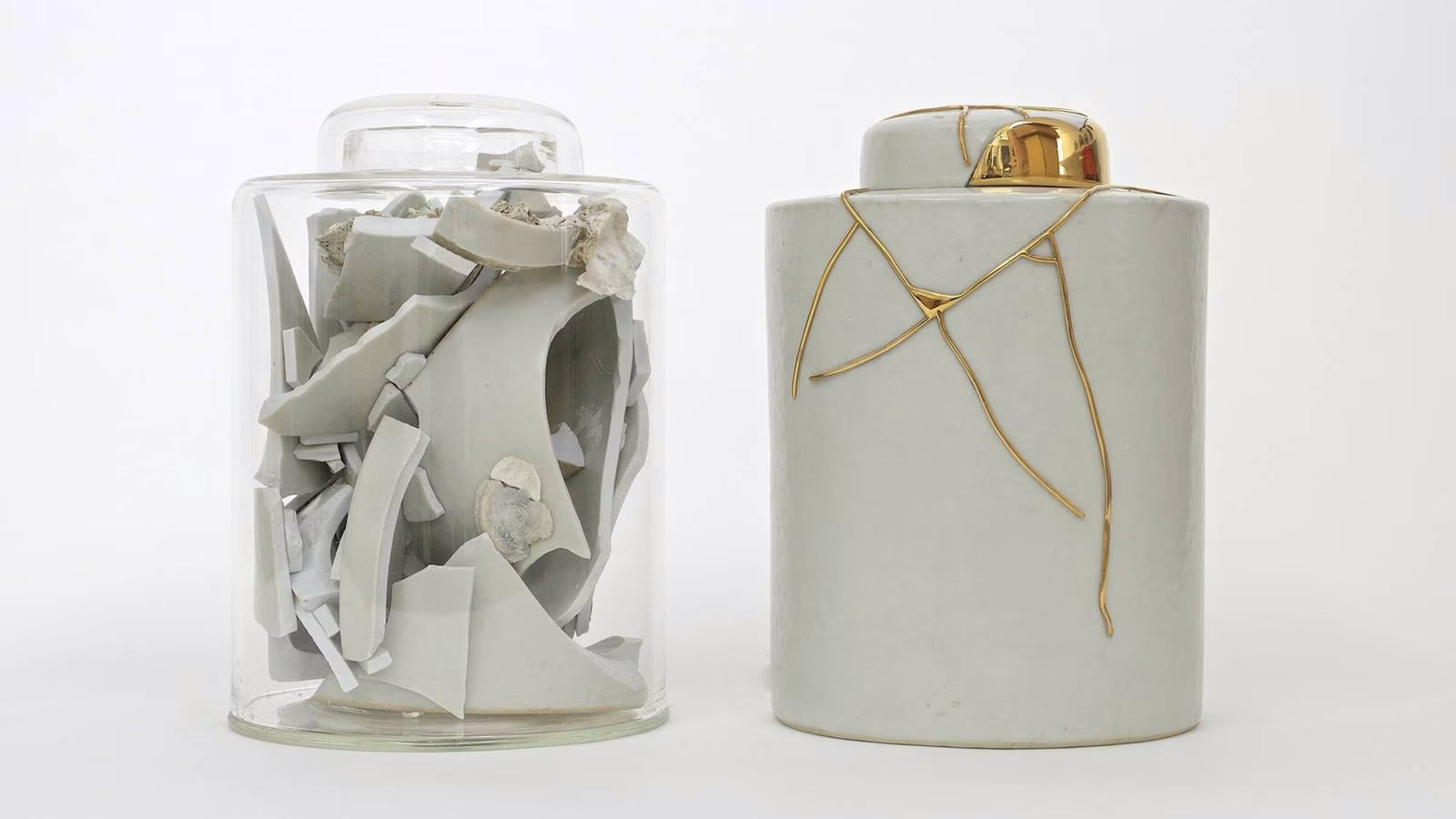
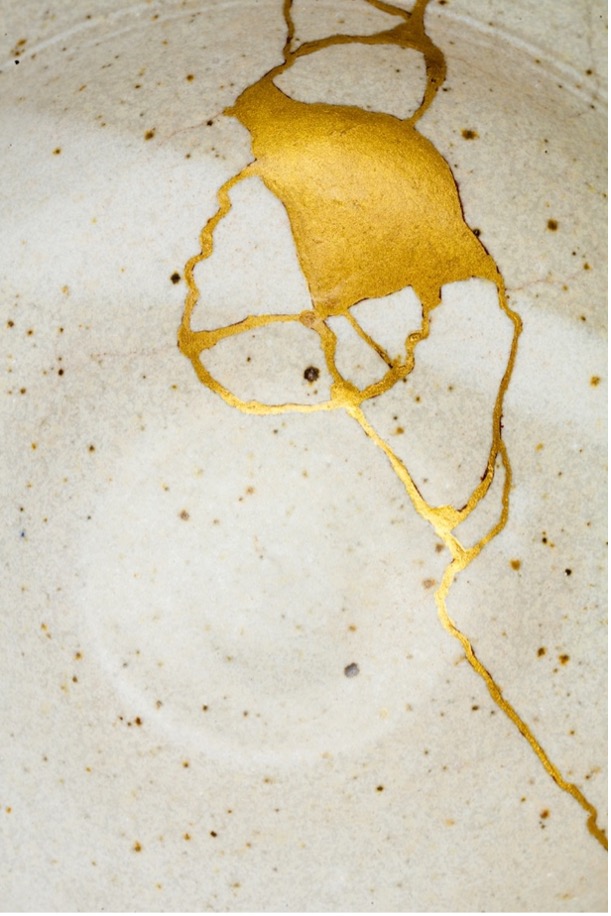
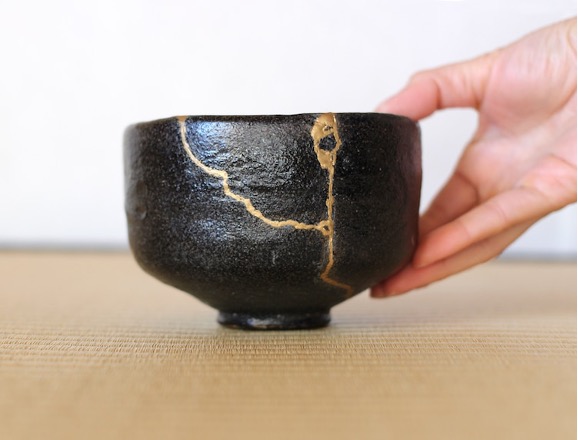
The origins of kintsugi, derived from the words “Kin” (golden) and “tsugi” (joinery) and meaning ‘golden seams,’ are not entirely clear but this extravagant method of repairing broken ceramics is likely to have developed around the early 16th Century. An earlier legend has Japanese shogun Ashikaga Yoshimasa sending a cracked chawan (tea bowl) back to China for replacement only to be told that his celadon-glazed bowl was so rare that there was no replacement possible. Instead it was repaired using the traditional Chinese method of metal staples. Yoshimasa’s displeasure at this crude repair led to craftsmen finding a more aesthetically pleasing method using lacquer and gold pigment to repair ceramics. It was in the 17th Century, when the tea ceremony flourished – and the importance of the tea bowls associated with it grew – that kintugi became a more commonly used repair process.
Traditional Japanese lacquer masters would have used urushi, a lacquer made from the sap of the urushi tree, in use in Japan for 7,000 years, to glue the broken vessel back together and fill in any small chips. Urushi in it’s wet state is poisonous and causes severe rashes though over time kintsugi craftsmen would have become immune. In Japanese towns where craftsmen still practice the traditional methods onsen water gets tainted by the residue from the craftsmen’s bodies building up resistance in local children from when they are just babies – though it is also said that a drop of urushi is dropped in a baby’s first bath.
The lacquer bonds the ceramic pieces immediately and can’t be removed so precision and speed are tested in putting all the pieces back together simultaneously. While it bonds immediately it dries incredibly slowly and a piece may have to be left for weeks before being sanded when finally the artisan can finish the repair by painting over the surface of the resulting seams with gold.
Kintsugi also represents a philosophical idea, related to the 2 distinct concepts of wabi-sabi fused to capture the beauty of things that are imperfect, impermanent, and incomplete. Mended cracks become part of an object’s unique history and enhance its beauty, rather than being an imperfection that has to be hidden. Wabi is in the attraction to unadorned, subdued, imperfect forms, an elegantly shaped vase with a crack that continues to stand despite its crack and sabi in the cracks, roughness and other imperfections painted by time, the depth that comes from ageing. This philosophical aspect has been expanded and the internet is now full of self-help and wellness gurus using it as a metaphor for people to embrace their flaws. That’s a different story.
Today, kintsugi has been adopted by contemporary ceramic artists but the materials and innovative and creative methods they use are very different from those used by the skilled lacquer artisans of 500 years ago. Today’s artists experiment with ‘collaging’ different ceramics pieces together, use modern epoxy glues and different metals – though gold is still favoured as it doesn’t tarnish or leach into food.
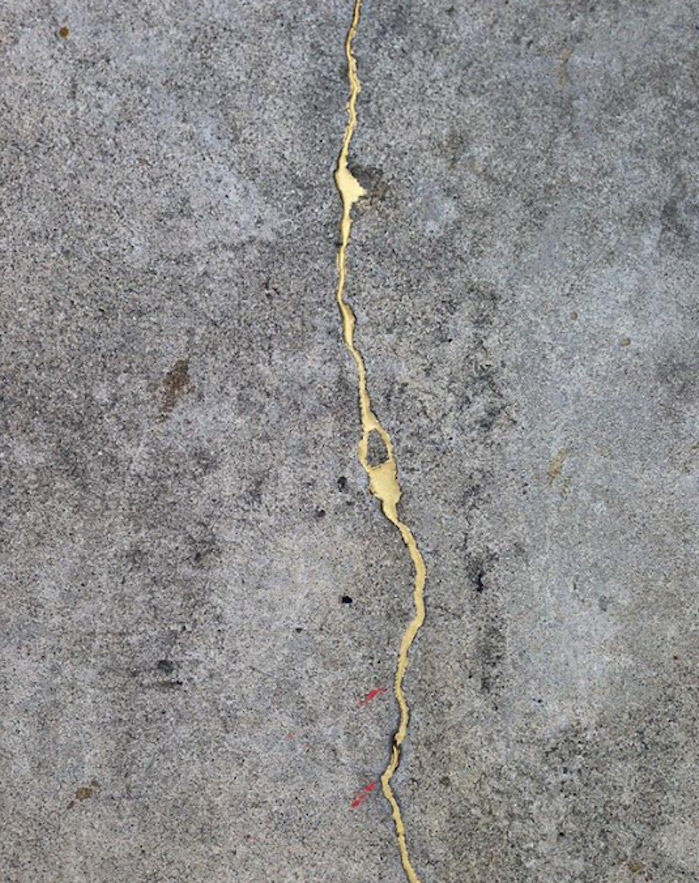
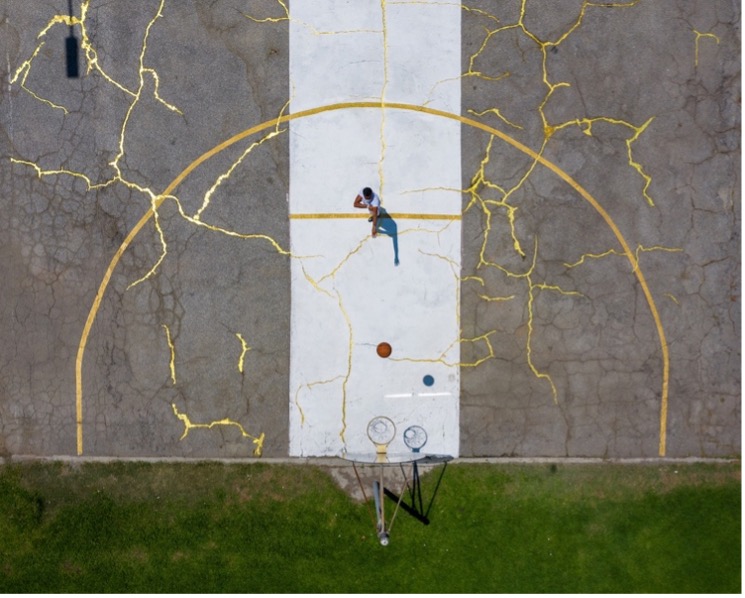
On a much bigger scale ‘Sidewalk Kintsukuroi’ (golden repair) is a project by New York artist Rachel Sussman mending ‘urban cracks’ using a variation of kintsugi and ‘Kintsugi Court’ by LA based artist Victor Solomon where he patched up the cracks in a Los Angeles basketball court with golden resin to highlight the role that sport can play in our collective healing process.
