“Although it is very much a contemporary hotel experience, the soul of the hotel revolves around the experience of landscape and hospitality as if they were one”
Emperors ruled Japan from Kyoto for eleven centuries until 1869 and with 1,600 Buddhist temples and 400 Shinto shrines, as well as historic palaces, gardens and castles, the city remains one of the best preserved cities in Japan as well as being regarded as it’s cultural capital. Directly facing the 17th century Nijo Castle, one of the UNESCO listed “Historic Monuments of Ancient Kyoto,” Hotel The Mitsui Kyoto is built on the site of the original residence of the Kitake, the executive branch of the Mitsui family.
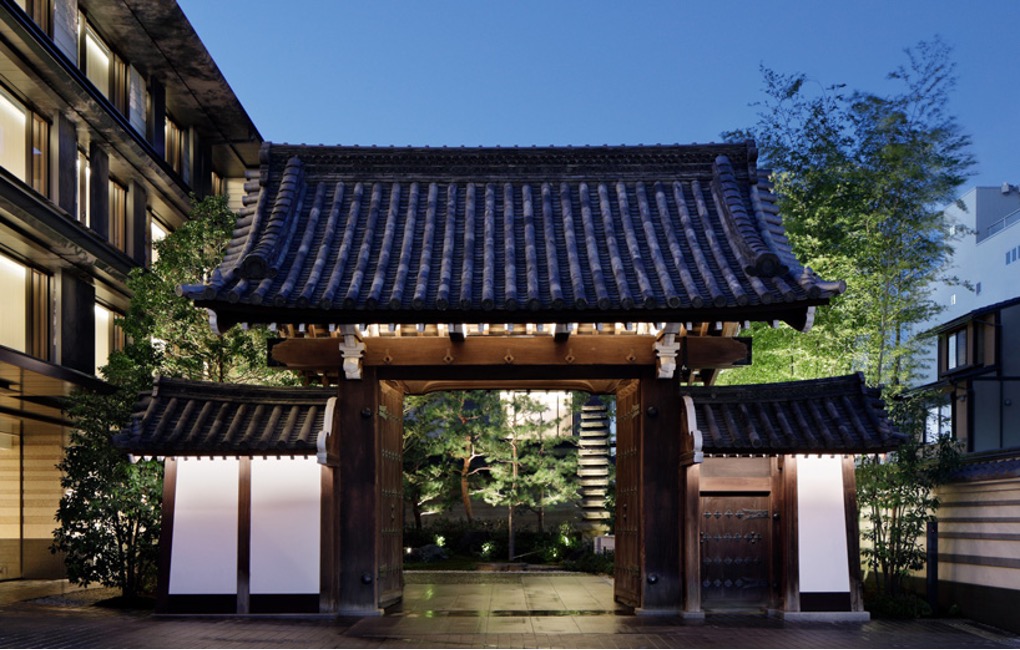
The 18th century Kajiimiya Gate marks the hotel entrance as it once marked the entrance to the Mitsui estate before a pathway leading through bamboo and pine and maple trees and past a stone pagoda takes you to the lobby. Arranged around an internal courtyard garden with four floors above ground and another level below the Andre Fu designed hotel has a very intimate feel.
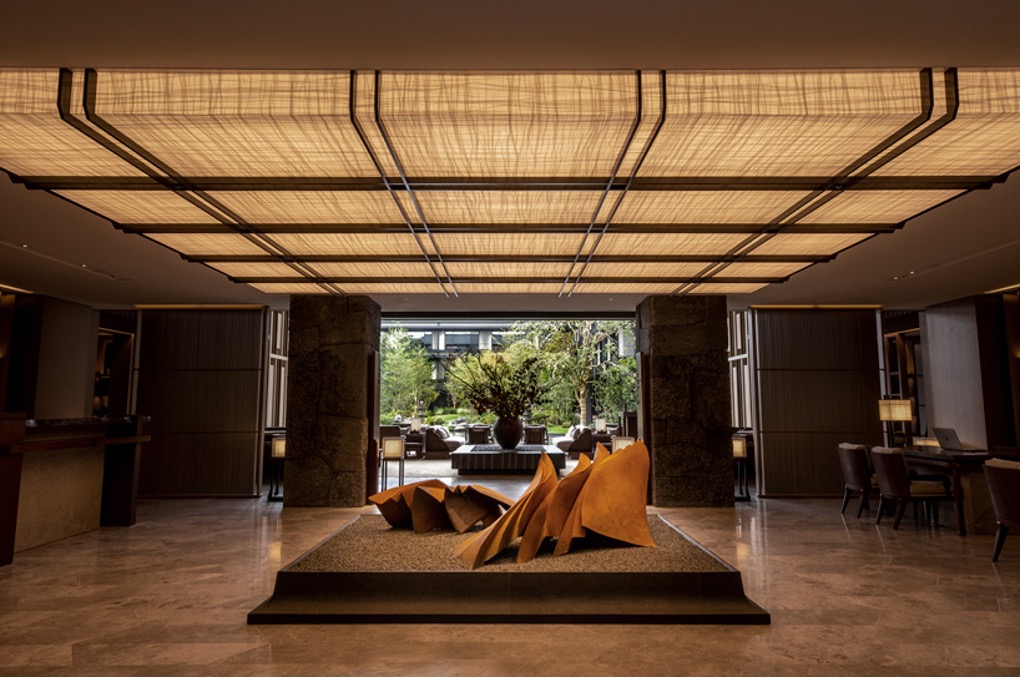
That intimacy is enhanced in the lobby by the cherry clad walls and a huge 5.5m x 4.5m shoji lantern suspended from the low ceiling over a large but delicate clay fold sculpture set in finely raked sand by artist Yukiya Izumita “reflecting Japanese qualities of antiquity and modernity, fragility and strength, and vulnerability and resilience”
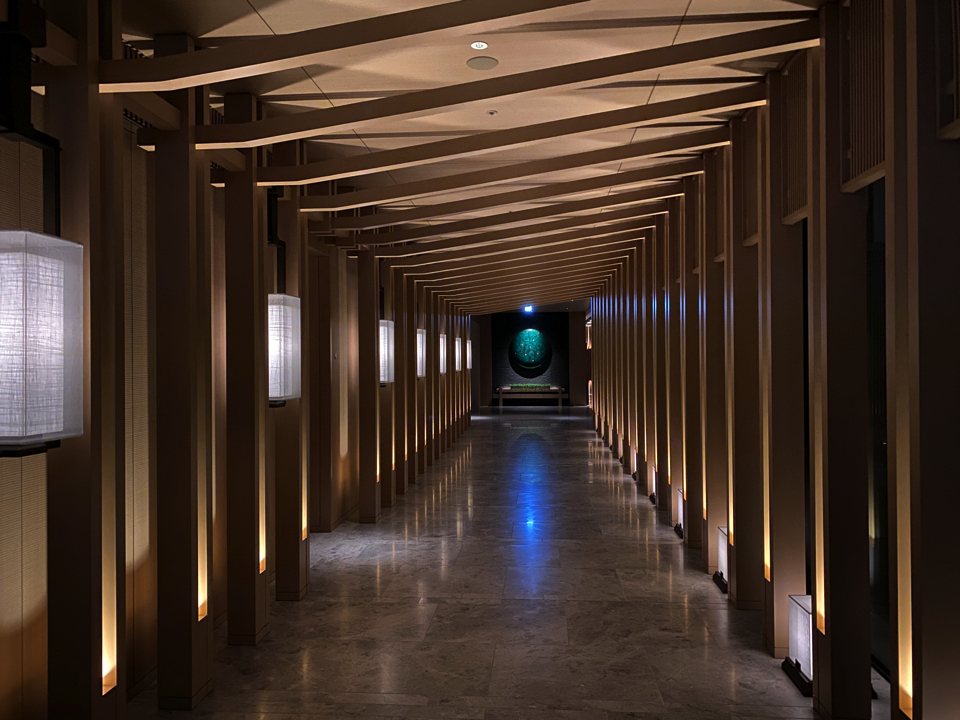
Throughout the project Fu worked closely with numerous Kyoto artisans as he sought to reflect local heritage and “interpret, and celebrate the city in a respectful way.” A wall of angular timber slats in the lobby is a modern interpretation of a traditional ‘kekkai’ used in Japanese architecture to create a spiritual and functional barrier and corridors of slanted light wood beams reflecting the vermillion Senbon Torii (“thousands of torii gates”) at Kyoto’s Fushimi Inari shrine. Fu comments “These were not straightforward interpretations of Japanese traditions,” Fu explains. “I had to trust my instincts.”
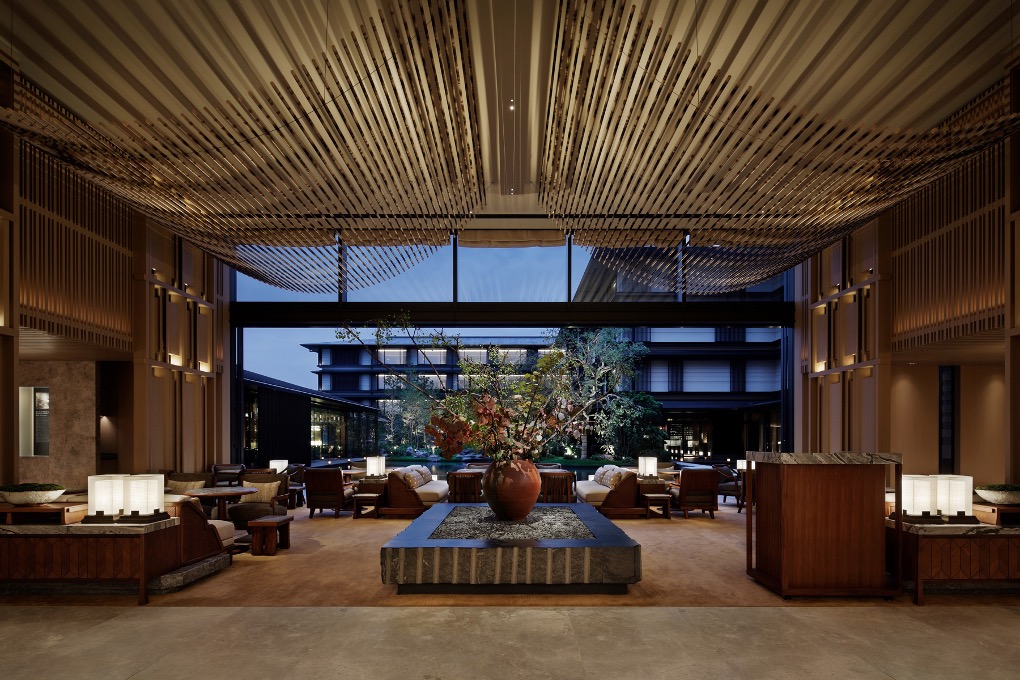
The courtyard garden acts as a visual focus for the tea lounge. Floor-to-ceiling windows overlook a modern reinterpretation of the original “strolling garden,” with lantern-lit water features, a beautiful cherry tree, reddening maples, and stepping stones embodying ‘teioku ichinyo’ – the Japanese concept of absolute harmony between the architecture and the garden and created by Kyoto landscape master, Shunsaku Miyagi.
Entering the lounge, a dramatic change of ceiling height from the low ceilinged lobby is softened by an undulating bamboo installation above. Hand-painted and evocative of flowing kimono fabric it also seems to flow into the garden outside. The open fireplace is carved out of a single block of stone and handmade washi lampshades by local artisans cast a warm glow over woven wall panels created by local kimono designer Jotaro Saito. ‘I focused on imbuing the interiors with a sense of luxury through honest materials and avoided the temptation to over-perfect details.. I wanted to create a subtle atmosphere..’ says Fu.
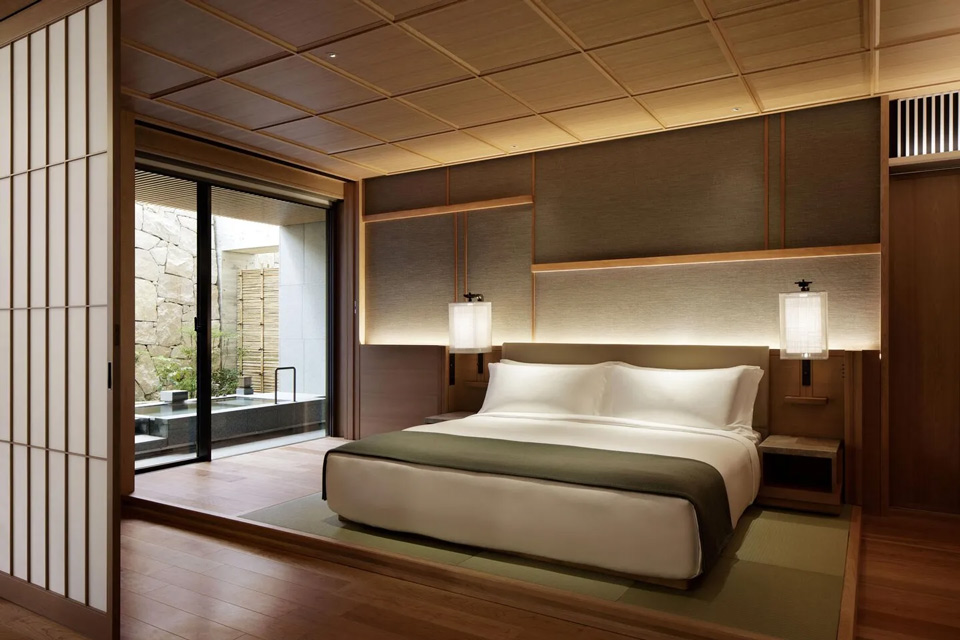
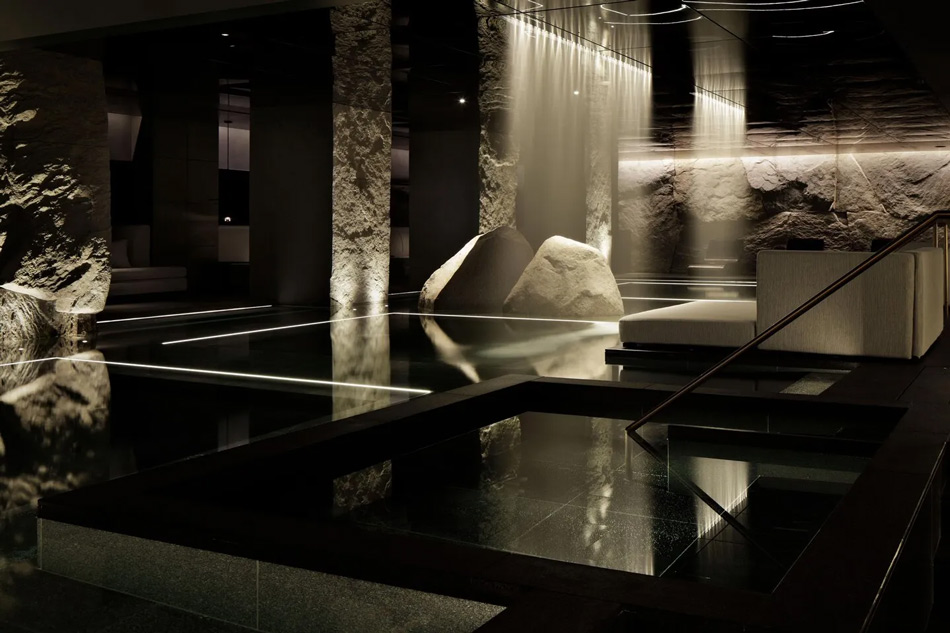
The soft palette of materials palette continues in the guest rooms – pale woods, light green carpets with abstract water motifs, moss pots, rocks and more of Saito’s ‘kimono’ panels on the walls. The Mitsui is the only hotel in Kyoto with its own natural hot spring and in the basement Thermal Spring Spa designer Yohei Akao uses moody lighting, rock-hewn walls, boulders and indigo textile panels around a series of connected onsen pools.
The mix of contemporary artisanal work and traditional heritage is also reflected in the smaller items in the hotel from hand woven wire-weave plates from Kanaami-Tsuji, to Nakagawa Mokkougei’s wooden trays and celadon ceramics from Asahiyaki.
