

Hopefully the Shibui Collection website shows that aesthetics are important to me and that, while not a full on minimalist, I do err in that direction. So I want to open with an admission that decluttering is not a problem I have ever really had to face and an acceptance that this does colour my opinion of how much of the huge amount of decluttering advice you can find on the internet is a waste of time – a lot.
Suggestions range from saying you can declutter in under five minutes, an hour, a day, or some other arbitrary time. Others list five or ten ways to start decluttering, or tell you the mistakes you can make when trying to declutter as well as the emotional hurdles that you have to jump to even start. Once you do get started you can either stick with the traditional and gentle method of starting slowly and gradually or the rather more dramatic ‘zero percent’ method of sticking everything in a box and only retrieving what you really need over the next few weeks – much like moving home. I have moved more times than I can remember and it certainly does help the decluttering process though it might be a bit of a radical first step if you’re struggling to declutter.
Marie Kondo has developed tidying into a very good business, though I remain amazed that tidying is a business, though I am also amazed that in the US you can be a Certified Professional Organiser. Kondo has a somewhat ‘Marmite reputation’ – either adored and slavishly followed or mocked for some of her methods such as only keeping items that ‘spark joy’ or giving thanks to each individual item for the service it has provided to you before you get rid of it. I am a big fan of many aspects of Japanese culture and aesthetics – my company is called Shibui Collection and my interior design company was called Kinari Design – both names that relate to Japanese aesthetic principles. I am also aware of the elements of Shintoism that she says influenced her, such as the idea that objects can have a soul or a spirit. I am unfortunately not enough in tune with my possessions to ‘clasp each one to my chest and see how it made me feel’ as one aspiring ‘Kondo-ite’ suggested.
Kondo’s TV shows appear to suggest that the process takes hours when in fact each episode is filmed over four to six weeks. This does, however, include a full house tidying which given the vast mountain of clothes, broken electronics and other junk piled up in the room they focus on is a really scary prospect and explains the weeks spent on the job. Assuming the people featured are not part of the two to five percent of the population that deals with compulsive hoarding disorder I sort of think that the need to tidy up should have been somewhat obvious to them without needing professional help ( I hadn’t checked if Kondo is a Certified Professional Organiser until writing this. When I did check I found out that it is possible to become a Certified KonMari Consultant!)
The fact is that we are drowning in ‘stuff’, we buy things we don’t need (sometimes don’t even really want) urged on by the over 600 ads that we see every day. We (mostly) all understand that decluttering is a good idea in principle but it seems to need a shift in mindset to how you relate to the ‘loss’ of the money you paid for the items and to possessions in general. As I said I am not a manic minimalist but I do hate unnecessary clutter. I can’t relax or concentrate unless the space around me is tidy and uncluttered so I find it hard to understand people who can stand it to the point where they become the subject of a Kondo TV programme.
Kon-Mari says her process is not minimalistic and it doesn’t mean you dump everything until your worldly possessions fit in a rucksack – just things that don’t ‘spark joy.’ I would be a bit more matter-of-fact and describe such items as useless or annoying. Adding in my own thoughts to the advice I’ve seen I have come to the conclusion that there are only three categories of items you need to deal with: Useless, Useful and Sentimental.
Useless items: Dump, give away, sell or in some other way get rid of them. Despite the plethora of second-hand websites selling items is not quite as easy as many blogs suggest, or it takes up so much time and energy that it becomes frustrating or almost impossible for most people. Giving away works well even if charity shops seem inundated and often say no. You get the point, re-using is better than throwing away, but no guilt is necessary, the cord for the ten year old Apple laptop is useless, unless you’re still using a ten year old Apple laptop and I’m not sure they let you!
The second category is pretty easy to understand – Useful items: All the things that you actually use: plates, bedlinen, towels, some (rarely a high percentage) of your clothes. These items should be pretty easy to deal with as well, keep what you actually need and regularly use. Multiple ‘copies’ of all the items you need – in most cases you obviously don’t need. Sort them into piles, pick the best or favourite ones and get rid of the rest.
The final category is by far the hardest to part with items from and the most difficult to define – Sentimental items: In reality it’s the memory that the item triggers that is the sentimental part rather than the item itself. If this is the case does a digital pictures of the item work, or a scrapbook of pictures? Otherwise, prioritize and keep the items that trigger the best memories and take pictures of the rest.
Pretty much everything fits into these three categories. If clothes don’t fit you they are useless, if you really think that you will be that size again then set a time limit. Digitize photos and all the boring household documents. Still hanging onto CDs – there are ninety million songs to stream on Apple Music. DVDs or even videos – how do you even still play videos?
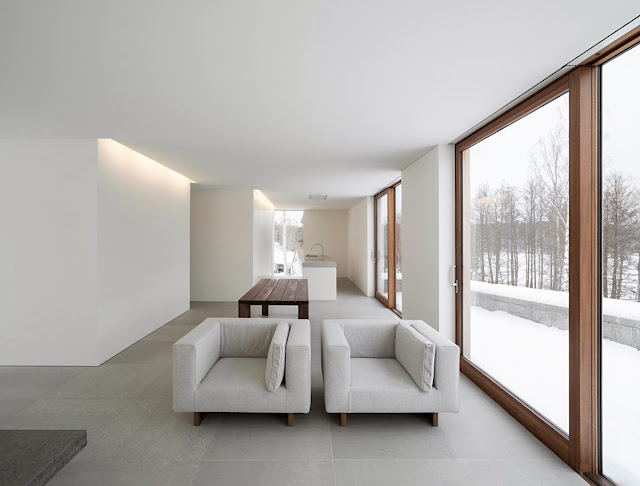
I love John Pawson’s work though I’m not sure I could live quite this decluttered! But…
Decluttering is not just a tidying issue – it wouldn’t be an issue at all if you hadn’t ‘cluttered’ in the first place. Buy fewer things, buy better things and, going back to Japanese principles, look after them properly. They don’t have to have a soul for you to look after them.
It’s depressing how much bad and cheap design is out there and this is part of the problem that leads to clutter – things are easy to buy, chuck in a cupboard and having forgotten you have bought it, you buy another. Good design doesn’t always have to mean expensive, but it can be hard to find, so look for items that are well designed, buy them, look after them and don’t replace them all the time. More guilt to do with buying things you don’t need, don’t want or already have would save the issue of decluttering them down the line.. and probably the world may not need quite so many Certified Professional Organisers.
