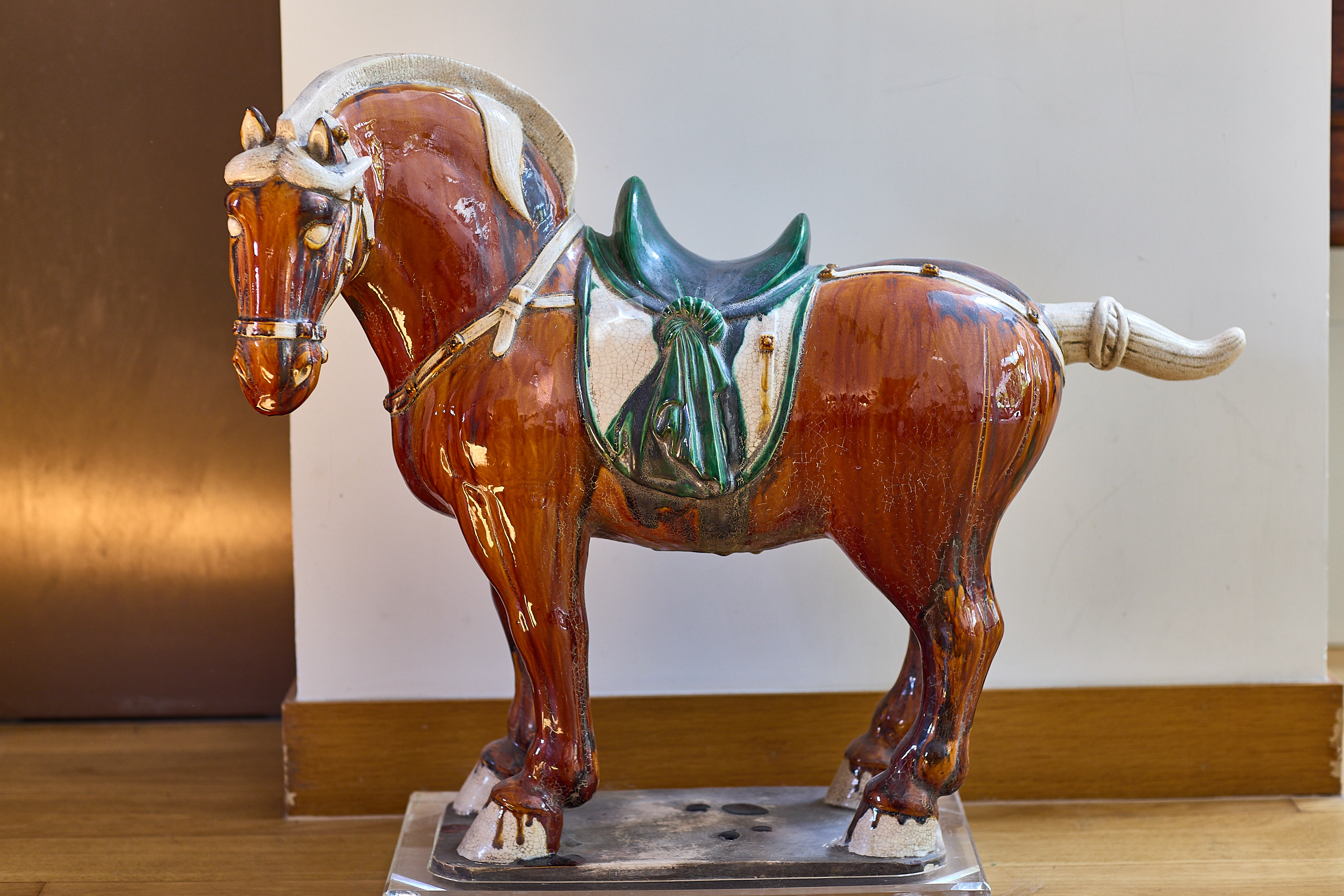
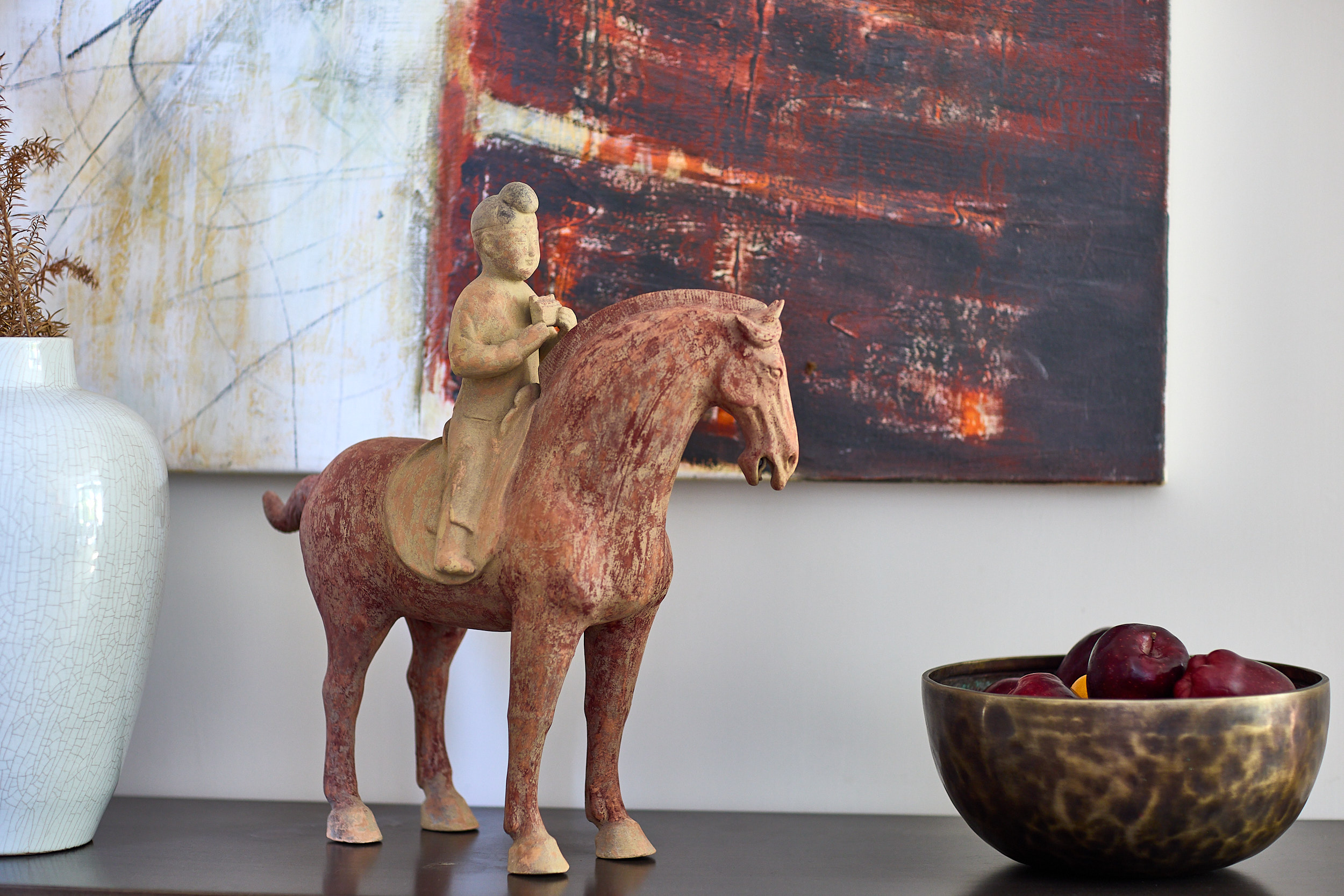
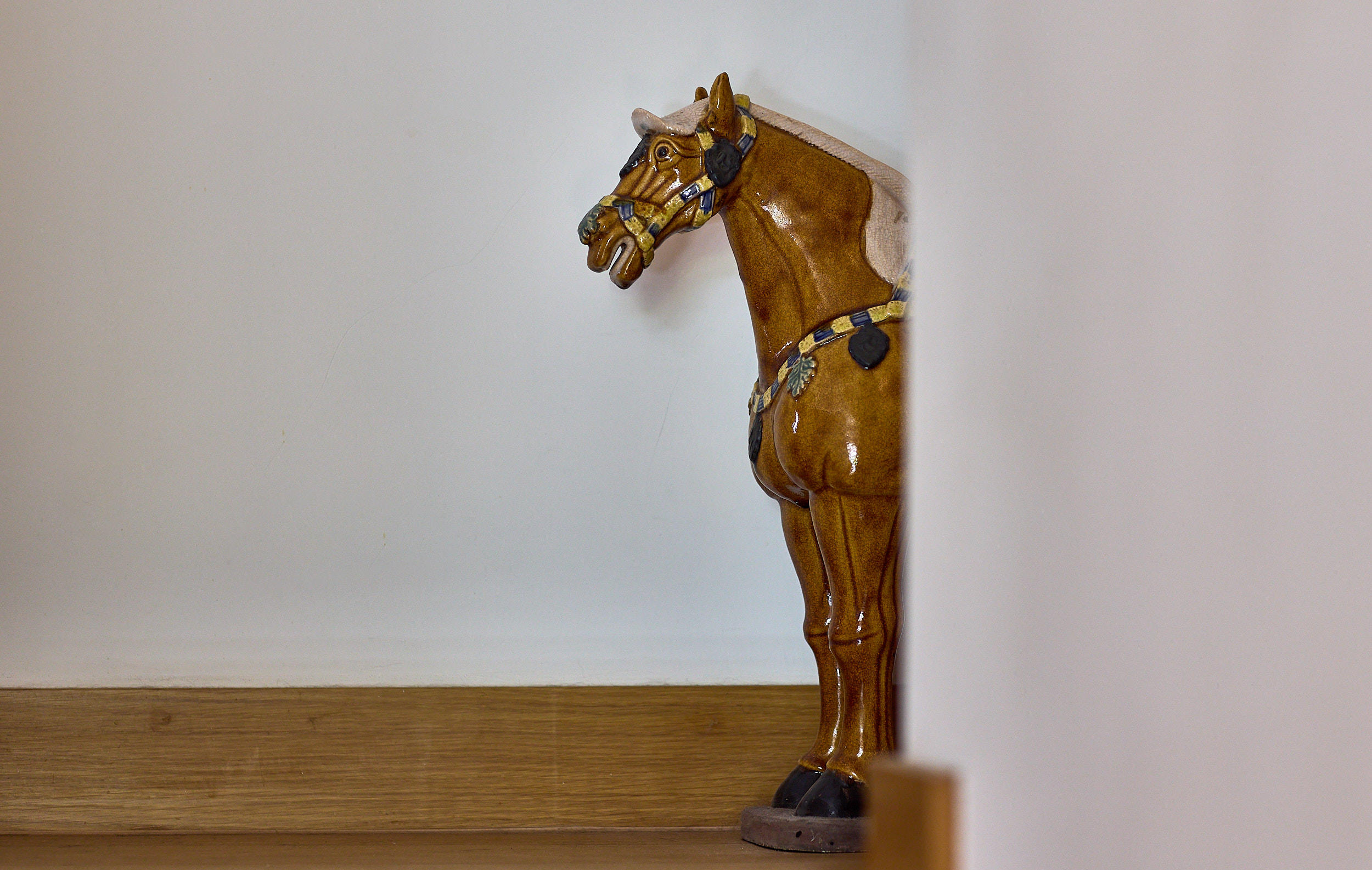
I’ve always come back to horses in Chinese art. The ceramic and clay sculptures are not especially dramatic for the most part – but you can still quietly feel: power, belief, social order, pleasure, loss. Tang‑dynasty figures especially have a particular balance of care and confidence. They are muscular, alert, well fed, but never exaggerated. There’s an ease to their stance – a lifted leg, a gentle turn of the head, a neck held high without straining. The artists knew these animals well, and took time to look properly.
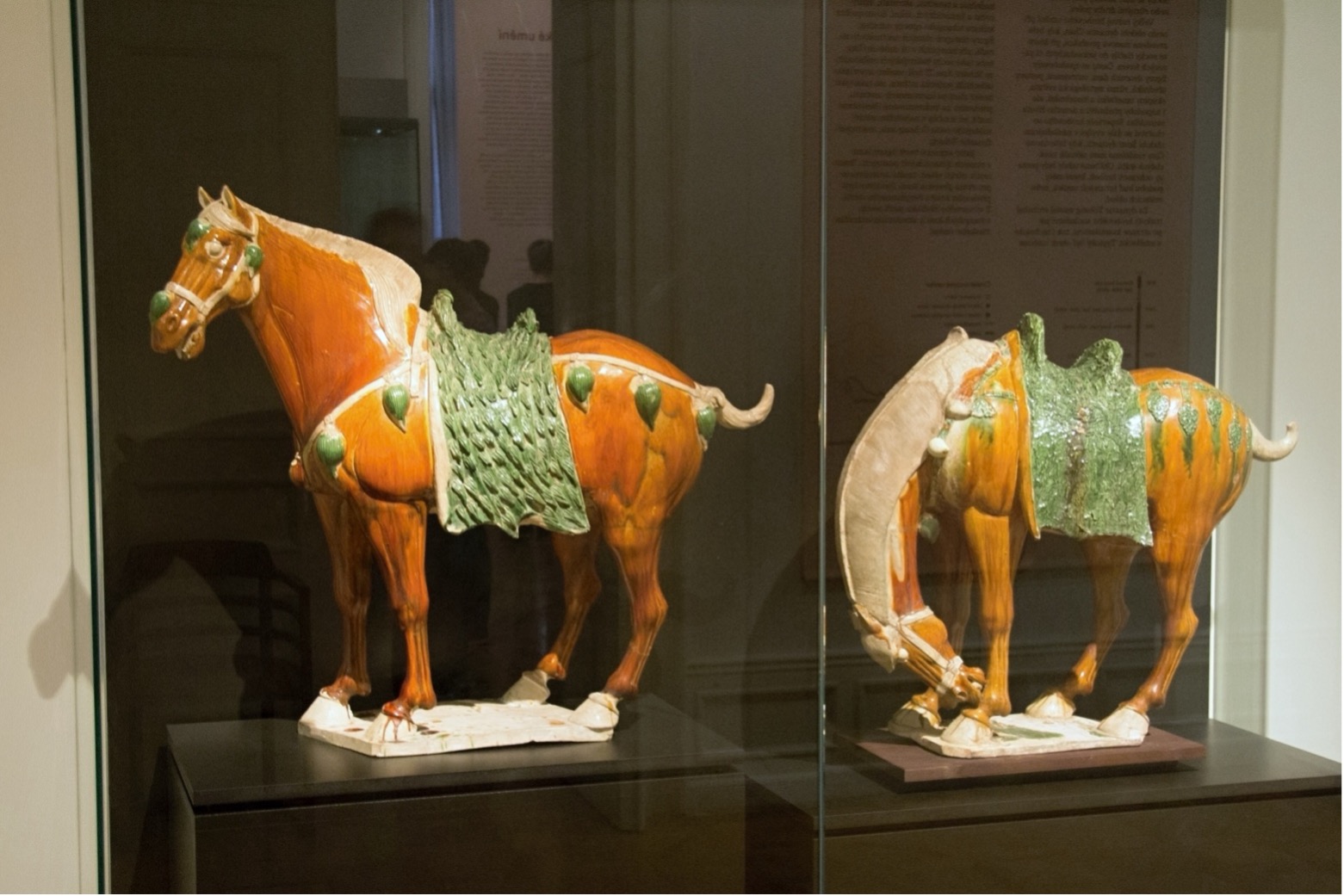
The glazed tomb horses made for the Tang elite especially are elegant and composed. The sancai (three colours) glazes flow – green into ochre, cream breaking through – and the glazes are allowed to run, never rigidly controlled. Nothing is decorative for its own sake. The harnesses are detailed, but not fussy. The anatomy is accurate, but not magnified. Just like a perfectly proportioned sports car they feel purposeful, even when standing still.
These figures were made for burial, intended to accompany the Po soul in its earthbound afterlife. In Tang China, horses were inseparable from status, military strength and assertiveness. To own powerful horses – especially Central Asian breeds such as the Ferghana horse – signalled wealth, reach, and cosmopolitan taste. Funerals were public spectacles. Burials were occasions to assert your status, to be seen. Processions included horses, attendants, musicians, even polo players and grew so excessive that emperors eventually had to regulate the number and size of tomb figures allowed – excess needed limits.
The figures are naturally expressive, but they seem to change to match the economic circumstances of the period. At times of dynastic collapse and war the horse becomes a more tragic symbol. Grand sancai glazed examples were replaced by crude unglazed miniatures in tombs and paintings feature emaciated horses – ribs visible, heads lowered. The images reflecting straightened financial times and the impact of fallen dynasties and displaced lives. It’s easy to read them as stand‑ins for their owners, or their makers.
Some details I continue to notice and don’t necessarily fully understand. Almost all Tang horses turn their heads to the left with only a handful looking right. There are a number of explanations offered: the horse looking like it’s turning towards an invisible handler; the movement (as with the raised leg) allowing the Po soul to see the object as a ‘living’ thing; the horse watching the tomb entrance as guard and the more prosaic argument that it improved weight distribution in the kiln and avoided the sculpture collapsing.
But what stays with me the fact that there is movement and richness but without drama or noise. They were made with purpose and they still hold our attention.
