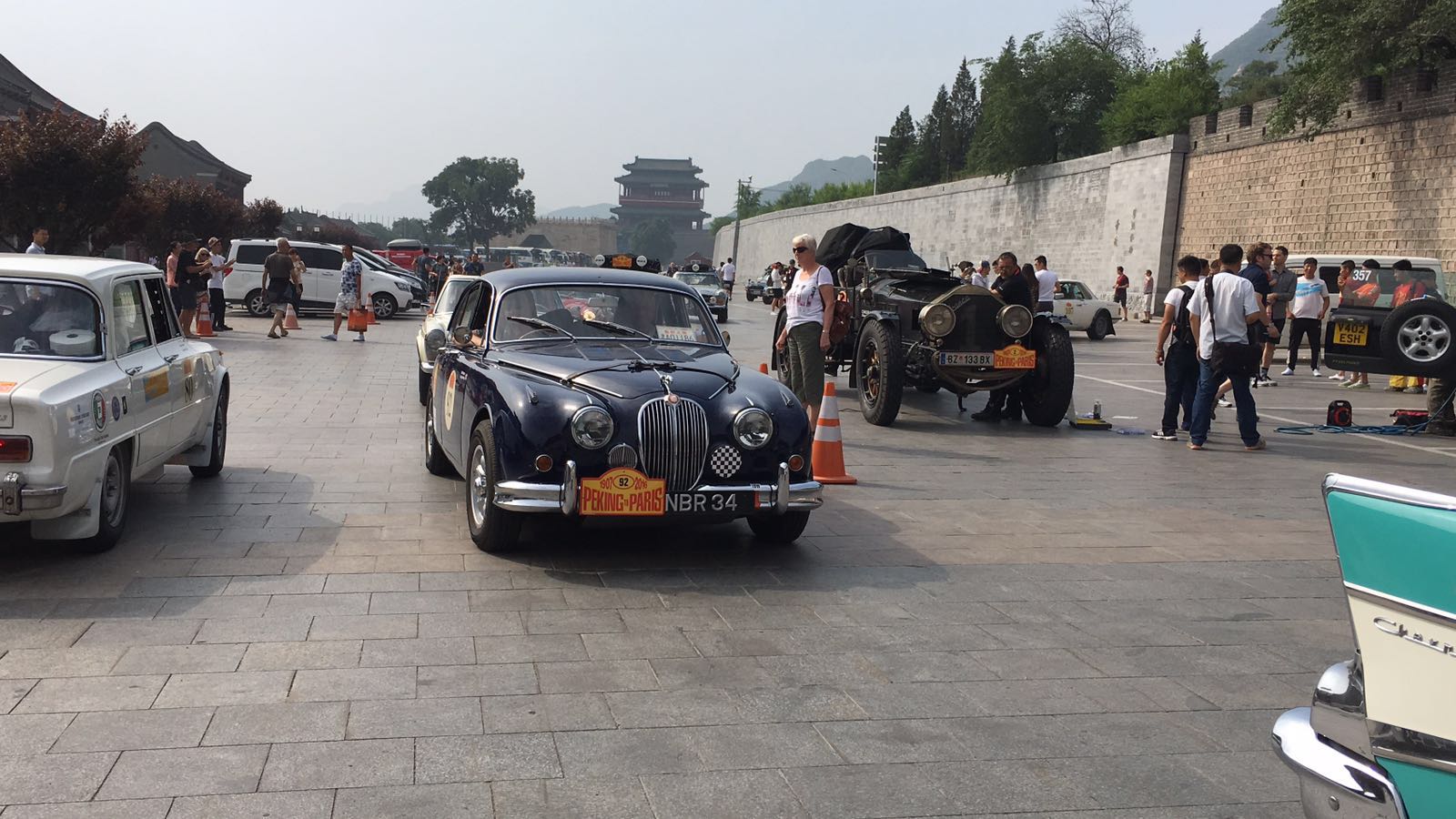
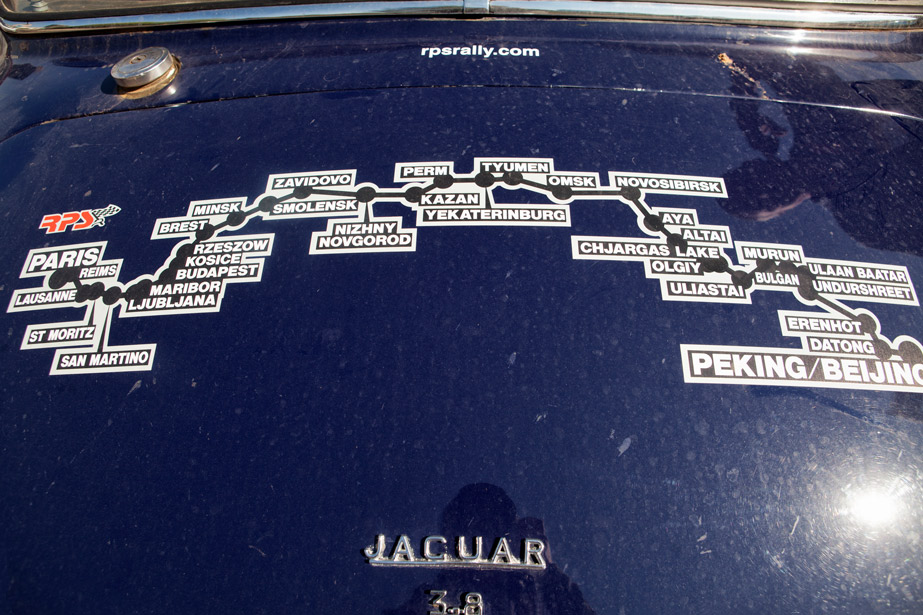
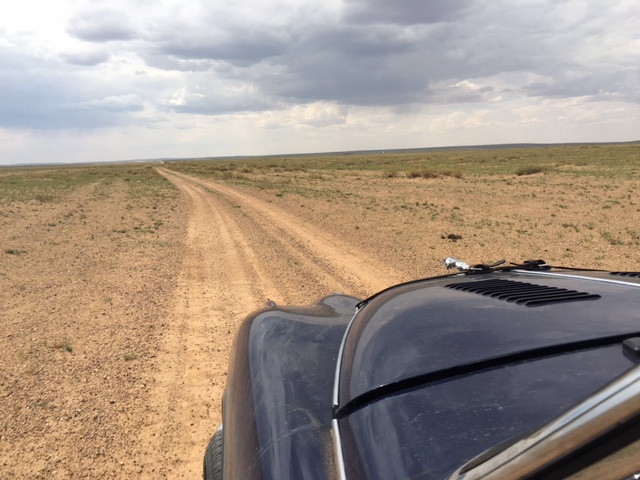
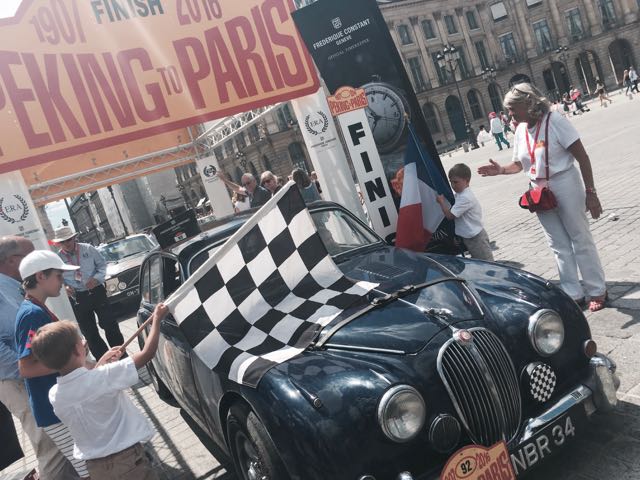
The Peking to Paris is a 9,000-mile rally for pre-1970 cars. Every three years over 100 very old cars set off from the Great Wall outside Beijing and work their way across the Gobi Desert, Siberia and much of Eastern Europe before finishing in Paris. The route changes event to event, influenced by geopolitics and war. Our 2016 run had to switch from the ‘Stans’ to divert north of Moscow. A lot of the route is on roads, although some of the Russian ones are closer to broken tracks, and sections of the route still involve mud, sand, rocks and the occasional shallow river crossing.
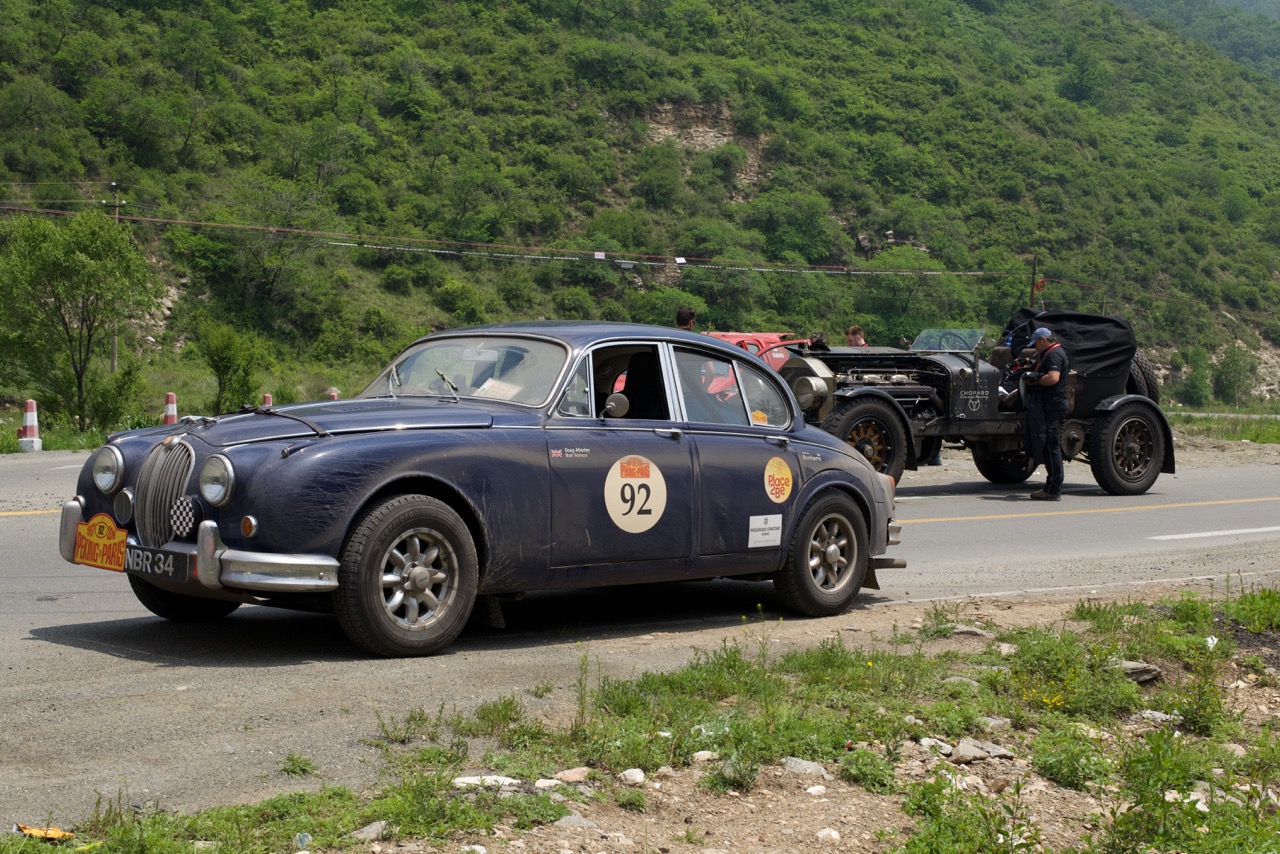
There is flexibility in the choice of car, as long as it is of the right period. The field reflects that. There were brave souls running open to the elements in 1910s Vauxhalls and 1920s Bentleys, a very cramped, low and open Morgan Plus 4, a Porsche 356, an Aston Martin DB6. Some cars were more obviously suited to the job – rally favourites like the Datsun 240Z, Volvo Amazon and Escort Mexico. Others made sense in a different way, such as the large American coupes from the 1940s which were built when many US rural roads were still dirt tracks: big, strong and high-set, they hurtled over ground we treated much more carefully.
Having paid our entrance fee in 2014 we had to decide on a vehicle that would manage to carry us from Beijing, across Mongolia, Siberia, Belarus, Poland, Slovakia, Hungary, Slovenia, over the Alps and a finish in Paris 35 days later. It was a simple decision – that would end up taking nearly nine months and involving countless telephone calls and emails. Scanning “Classic Car” and “Classic & Sports Car” and drawing on a long-standing love of classic cars resulted in a very long ‘Long List’.
While there is no fixed guidance beyond age, we were ‘advised’ that without Works Team support Italian cars were a risk – scratch Alfa and Lancia. We were too slow to decide that a Porsche, Datsun 240Z or Mercedes would have been a good idea, as others chose quicker – and the organisers wanted variety. Too poor (and too sensitive) to subject a Bentley or Aston Martin to the ordeal. The Peugeot 504 Coupe came and went. Seasoned advisers suggested the boring but very strong 504 Saloon was a better bet – ‘but the Coupe is cool’ was not regarded as a sensible argument. The Volvo P1800 brought memories of ‘The Saint’ which led to the Jaguar XJS – too long and too fragile. An E-Type offered amazing and useful access to the engine as half the car is bonnet, but we were assured access would happen unintentionally somewhere not far into China. as the bonnet would fall off.
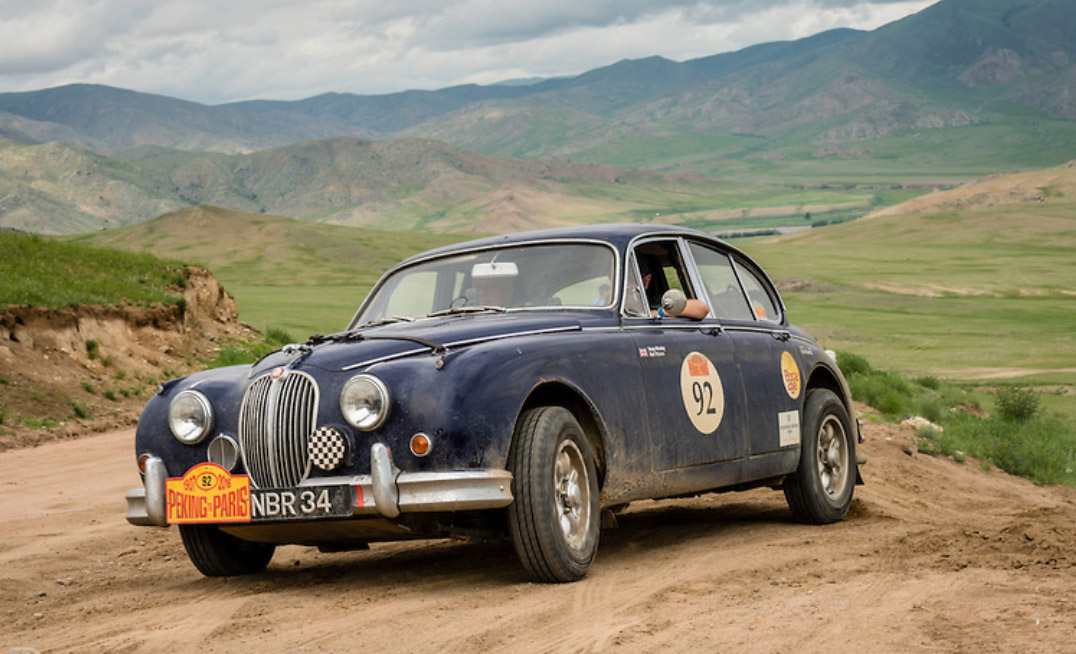
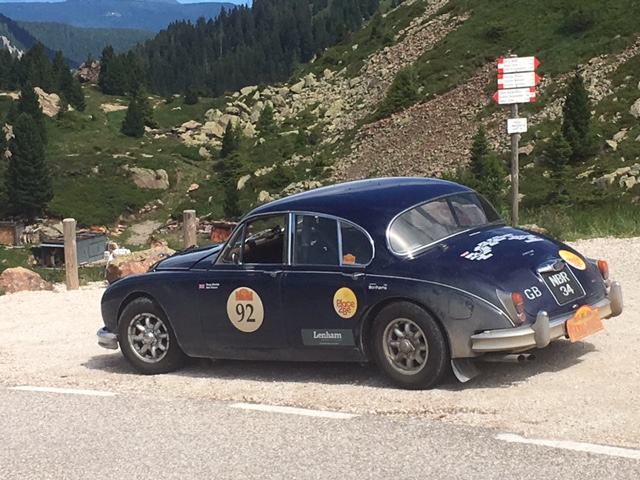
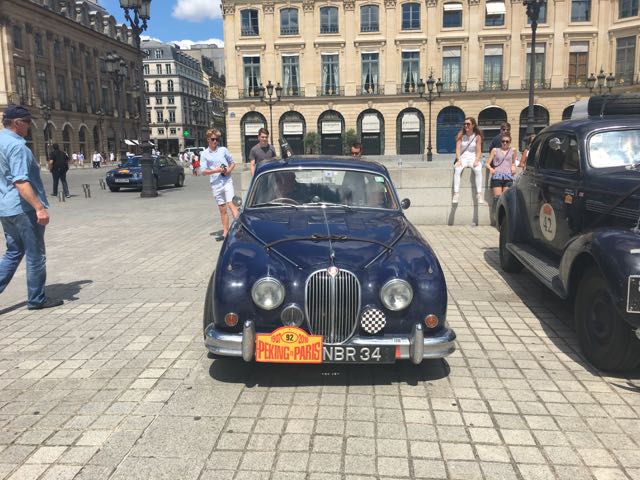
We still wanted something stylish, and preferably British, but we started to pay a little more attention to the actual requirements. The result – ‘Grace, Space and Pace’ – a 1959 Jaguar MkII. Fast, comfortable, roomy, with an under-stressed 3.8 litre engine – British and cool.
It still wasn’t really designed for what we were planning to subject it to, but before the start, there is a set of requirements that shape every car entered. Some of the preparation is not optional – roll cage, rally seats, upgraded suspension, filtration to cope with dust, and basic safety measures. Beyond that you make your own decisions – the leather bonnet strap being a necessary period rally touch!. The intention is not to reinvent the car, but to make it capable of lasting the distance while keeping it in period.
The more obvious concerns – power, speed, outright suitability – become less dominant than you might expect. Space matters more. The ability to carry tools, spare wheels and other parts and clothes for a month on the road. The way the car behaves after ten or twelve hours rather than one or two.
On the road, which still accounts for much of the rally, the Jaguar was perfect. Away from it, it required a different approach. We moved steadily rather than aggressively. It wasn’t a car to ram through the terrain, but it did get through it reasonably well. That was enough. We wanted to be competitive but we wanted to get to Paris more.
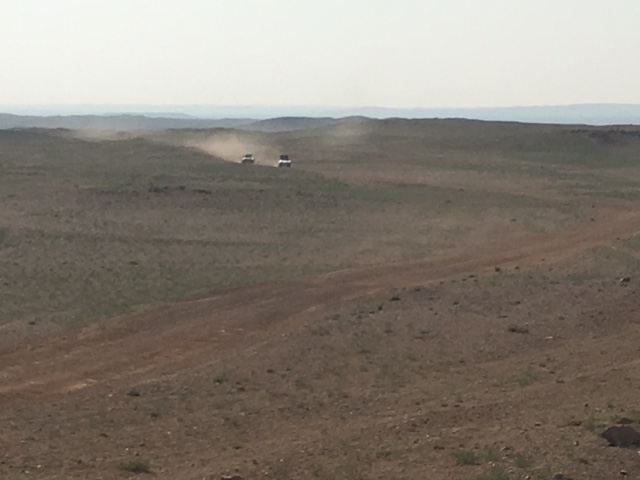
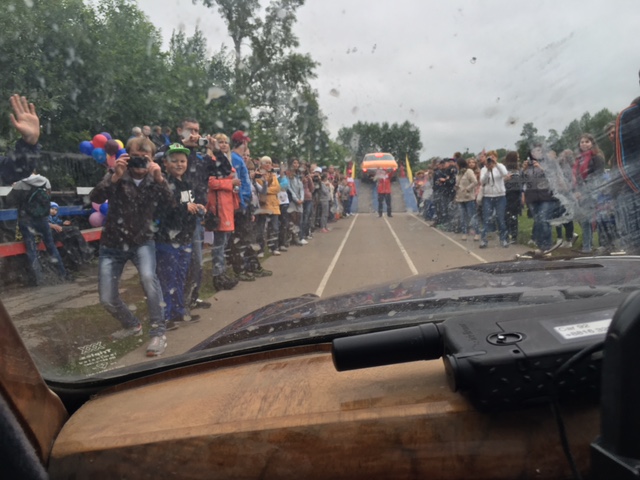
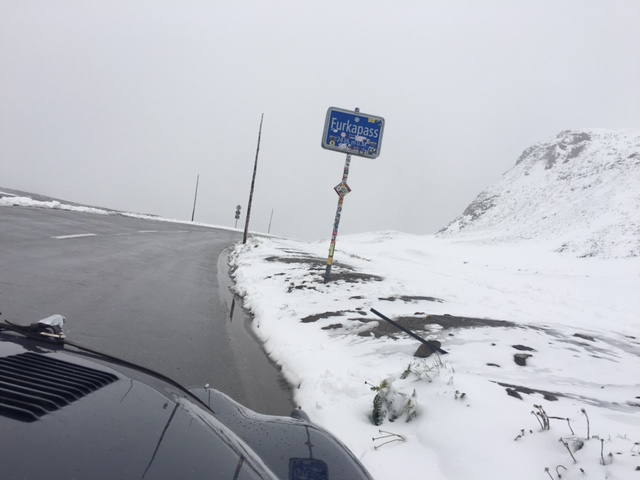
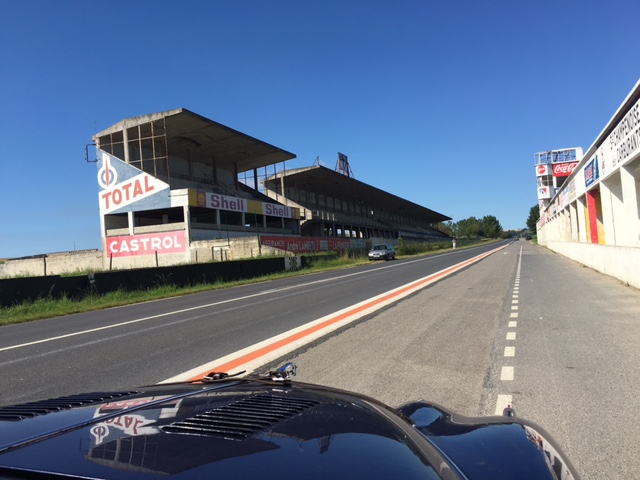
The rally is an ever changing succession of landscapes. Long, fast sections give way to very broken road surfaces, desert, grassland, rocky moonscapes and then back again. The car fills with an unbelievable amount of fine dust that never quite leaves. You drive through scenery that, sadly, you only partially register because the time available is always less than you would choose and you are timed to the second. The Gobi, stretches of Russia, Central Europe, The Dolomites pass by in your peripheral vision as you are too busy either watching for the next boulder or pothole, or keeping your finger running down the navigation drawings. There are moments of formality – finishing arches set up in town squares, official welcomes, requests for autographs in Perm and being interviewed by Cosmopolitan in Ulaanbaatar – and then long periods where it is just the car, the road, detailed navigation and time checks.
Occasionally, something more decisive interrupts that rhythm. A section of metal pontoon bridge in Russia lifted under the car and tore through the exhaust, and the aluminium gearbox casing. It was the sort of incident that could have ended our rally. Instead, it led to a day in Novosibirsk – luckily a scheduled rest day – where the car was taken to a local workshop. By the following morning a new exhaust had been fabricated, and a replacement casing cast and then rubbed down by hand. The car was returned to the hotel at three in the morning, washed and ready to go again. That is part of the logic of the event. The rally is as much about what happens around the car as what happens within it – local ingenuity, improvisation, generosity and excitement as over 100 strange and beautiful machines thunder through rural villages and remote settlements. You lose time, and in our case the chance of a Gold medal, but you keep going. That is the real measure.
Across the whole rally, the Jaguar never felt exceptional, but it rarely felt wrong. It carried what we needed, covered the road sections comfortably, and tolerated the rest without constant attention. We finished second in class and twenty-third overall out of 110 entries, which suggests our car choice was not as compromised as it might have seemed.
When we were choosing the car it was never going to be perfect for the conditions We had too many criteria that were not shaped by pure rally logic. It was unlikely to be a specialised rally car and hopefully unlikely to be a car that was simply not up to it. The choice ended up somewhere between the two. The Jaguar wasn’t designed for the rally, but it was capable of dealing with it as it was – and it was a Jaaag. That, in the end, was enough.
